Tech

Synthetic Data Generation: Solving Data Scarcity

Synthetic Data Generation: Solving Data Scarcity

In the "Data-Centric AI" era, the bottleneck for innovation is no longer the algorithm, but the availability of high-quality, labeled data. Synthetic Data Generation—AI-generated data that mimics the statistical properties of real-world data—is emerging as the primary solution to privacy regulations (GDPR) and data scarcity. Why Real Data is Failing Privacy Constraints: Using real customer data for testing often violates privacy laws. Edge Cases: Real-world data is often "imbalanced." For example, in fraud detection, 99.9% of transactions are legitimate. Synthetic data allows developers to "generate" thousands of fake fraud cases to better train the model. How it is Created: GANs…
Read More
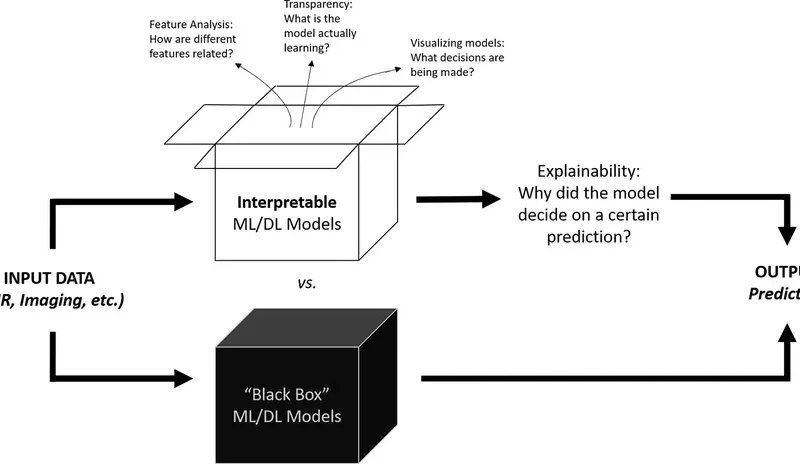
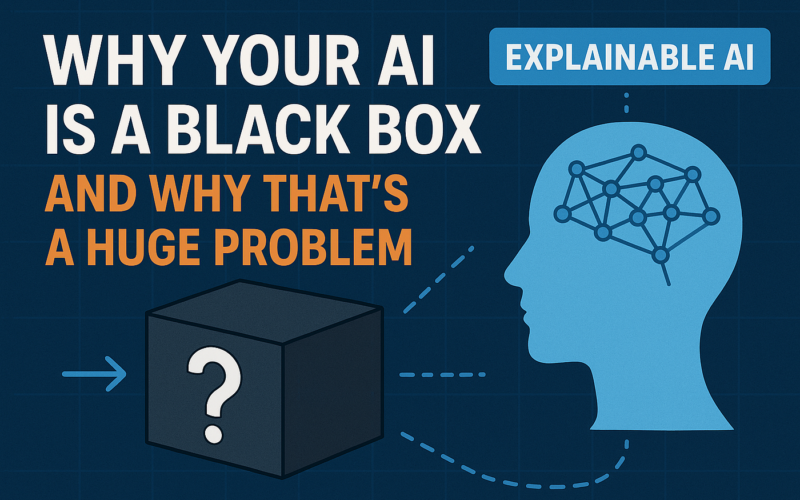
Explainable AI (XAI): Solving the “Black Box” Problem

Explainable AI (XAI): Solving the “Black Box” Problem

As AI systems are increasingly deployed in high-stakes environments—such as healthcare, criminal justice, and credit lending—the "Black Box" problem has become a critical barrier. Deep learning models often reach highly accurate conclusions, but their internal logic remains opaque. Explainable AI (XAI) is the suite of tools and frameworks designed to make these "thinking" processes transparent. The Trade-off: Accuracy vs. Interpretability Historically, there has been an inverse relationship between how well a model performs and how easy it is to understand. Linear Models: Easy to interpret but struggle with complex data. Neural Networks: Exceptional at pattern recognition but impossible for a…
Read More
Conversation with Gemini

Conversation with Gemini

please give me 30 articles titles on tech niche In the technology landscape, "niche" topics often bridge the gap between emerging scientific breakthroughs and real-world implementation. The following 30 article titles are categorized by key technological sectors, drawing from current research trends in artificial intelligence, blockchain, sustainability, and digital infrastructure. Artificial Intelligence & Data Science The Evolution of Generative AI: From Prompt Engineering to Autonomous Agents. Explainable AI (XAI): Solving the "Black Box" Problem in High-Stakes Decision Making. Synthetic Data Generation: A Solution to Data Scarcity and Privacy Regulations. Edge Intelligence: Bringing Real-Time AI Processing to IoT Devices. AI in…
Read More
Solving the “Black Box” Problem in High-Stakes Decision Making

Solving the “Black Box” Problem in High-Stakes Decision Making

The rapid deployment of deep learning systems across the global economy has yielded unprecedented predictive accuracy. Deep neural networks now outperform humans in specialized image recognition tasks, predict macromolecular structures with atomic precision, and process multi-modal data streams to automate financial markets. Yet, this leap in capability has introduced a critical systemic risk: the "Black Box" problem. As machine learning models grow in parameter scale—often utilizing billions of weights across hundreds of hidden layers—their internal decision-making logic becomes entirely opaque to human engineers. In low-stakes environments, such as streaming-platform recommendation engines or digital advertising placement, this opacity is an acceptable…
Read More
Technical Taxonomies: How XAI Extracts Meaning

Technical Taxonomies: How XAI Extracts Meaning

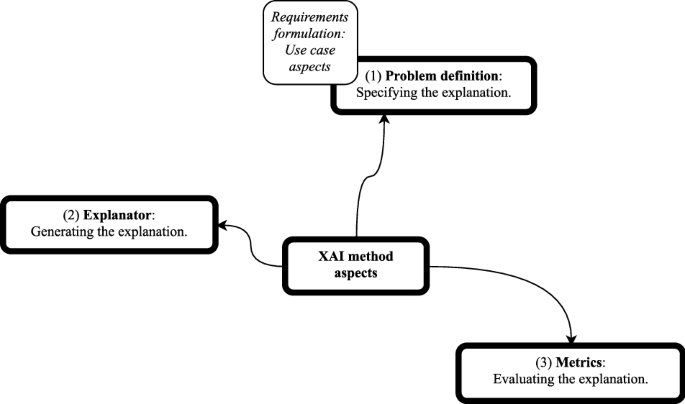
XAI methodologies are broadly categorized across three primary dimensions: Intrinsic vs. Post-Hoc, Model-Agnostic vs. Model-Specific, and Local vs. Global. 1. Intrinsic vs. Post-Hoc Interpretability Intrinsic Interpretability refers to designing a model from the ground up to be self-explanatory. This involves constraining the architecture so its internal mechanisms are viewable. Examples include generalized additive models (GAMs) or attention-based mechanisms where the attention weights can be explicitly mapped back to the input tokens. Post-Hoc Interpretability accepts the model as an unchangeable black box. The explanation method is applied after the model has been trained and run. It attempts to reverse-engineer or approximate…
Read More
Deep Dive into Core Mathematical Frameworks

Deep Dive into Core Mathematical Frameworks

Modern post-hoc, model-agnostic XAI relies heavily on two mathematical frameworks: LIME and SHAP. Both are widely deployed in production pipelines to generate local explanations. LIME (Local Interpretable Model-agnostic Explanations) LIME operates on a simple intuitive principle: while the global decision boundary of a deep neural network may be incredibly complex and non-linear, the decision boundary around a single specific data point can be closely approximated by a simple linear model. To explain a single prediction $x$, LIME performs the following steps: Takes the original instance $x$ and perturbs it to create a new dataset of slightly modified instances (e.g., masking…
Read More
Synthetic Data Generation: A Solution to Data Scarcity and Privacy Regulations

Synthetic Data Generation: A Solution to Data Scarcity and Privacy Regulations

The trajectory of modern artificial intelligence has shifted from algorithm-centric development to data-centric engineering. While early breakthroughs were driven by novel neural network architectures, contemporary progress is bottlenecked almost entirely by the availability, quality, and legal compliance of training data. In high-stakes industries, developers face a dual crisis: data scarcity—where critical edge cases are rare or non-existent—and stringent regulatory friction, enforced by frameworks like the European Union’s General Data Protection Regulation (GDPR), the California Consumer Privacy Act (CCPA), and healthcare statutes like HIPAA. Synthetic Data Generation—the mathematical production of artificial data assets that replicate the statistical characteristics, structural dependencies, and…
Read More
Edge Intelligence: Bringing Real-Time AI Processing to IoT Devices

Edge Intelligence: Bringing Real-Time AI Processing to IoT Devices

For the past decade, the default architecture for artificial intelligence deployment has been centralized cloud computing. Sensor data collected at the periphery of networks is packaged, transmitted over telecommunications infrastructure, processed inside hyper-scale data centers, and returned to the device as an actionable command. However, as the Internet of Things (IoT) expands toward billions of active nodes, this architecture faces three hard physical limits: latency bottlenecks, bandwidth saturation, and intermittent connectivity. Edge Intelligence (or Edge AI) represents the architectural migration of model execution and training away from centralized cloud servers directly onto localized hardware nodes operating at the network perimeter.…
Read More
AI in Drug Discovery: Accelerating Pharmaceutical R&D through Deep Learning

AI in Drug Discovery: Accelerating Pharmaceutical R&D through Deep Learning

The traditional pharmaceutical research and development pipeline is notoriously slow and inefficient. Known in the industry as "Eroom’s Law" (the observation that drug discovery becomes slower and more expensive over time, despite technological gains), developing a single novel therapeutic compound typically requires 10 to 12 years of research, costs over $2.6 billion, and suffers from clinical failure rates exceeding 90%. The primary cause of this inefficiency is the vast complexity of chemical space; the number of potential small molecules with drug-like properties is estimated to be around $10^{60}$, a scale far too large for brute-force laboratory screening. Artificial Intelligence is…
Read More
Natural Language Processing (NLP): Overcoming Cultural and Dialectal Biases

Natural Language Processing (NLP): Overcoming Cultural and Dialectal Biases

The democratization of Large Language Models (LLMs) has fundamentally transformed how humanity interacts with information. However, beneath the smooth prose of modern conversational AI lies a systemic architectural vulnerability: dialectal and cultural bias. Because the web-scale corpora used to train state-of-the-art models are heavily dominated by Standard American English (SAE) and Western-centric viewpoints, NLP systems inherently treat regional dialects, vernaculars, and non-Western communicative norms as statistical anomalies or inferior variants. As language models transition from novelty chatbots to systemic infrastructure—driving automated hiring processes, content moderation, educational grading, and legal evaluation—overcoming these embedded biases is one of the most critical challenges…
Read More